Safety

Safety is the product

General-purpose AI chatbots were designed for adults. WisoraAI was built from day one around a single principle: child safety first — even when that costs speed, features or convenience.

Two layers, two independent systems

Layer 1 — careful generation. Answers are produced under strict, age-specific rules written separately for ages 7–9, 10–12 and 13–15, in each of the 5 supported languages. Sensitive topics get short, factual answers; the AI is forbidden from inviting a child to “dig deeper” into them.

Layer 2 — independent inspection. A completely separate AI system then examines both the question and the generated answer, with no stake in the conversation. It returns a simple verdict: safe or not. Anything not safe is blocked before it reaches your child, and logged to your panel.

Two different systems, two different vendors, one goal: a mistake by one layer is caught by the other.
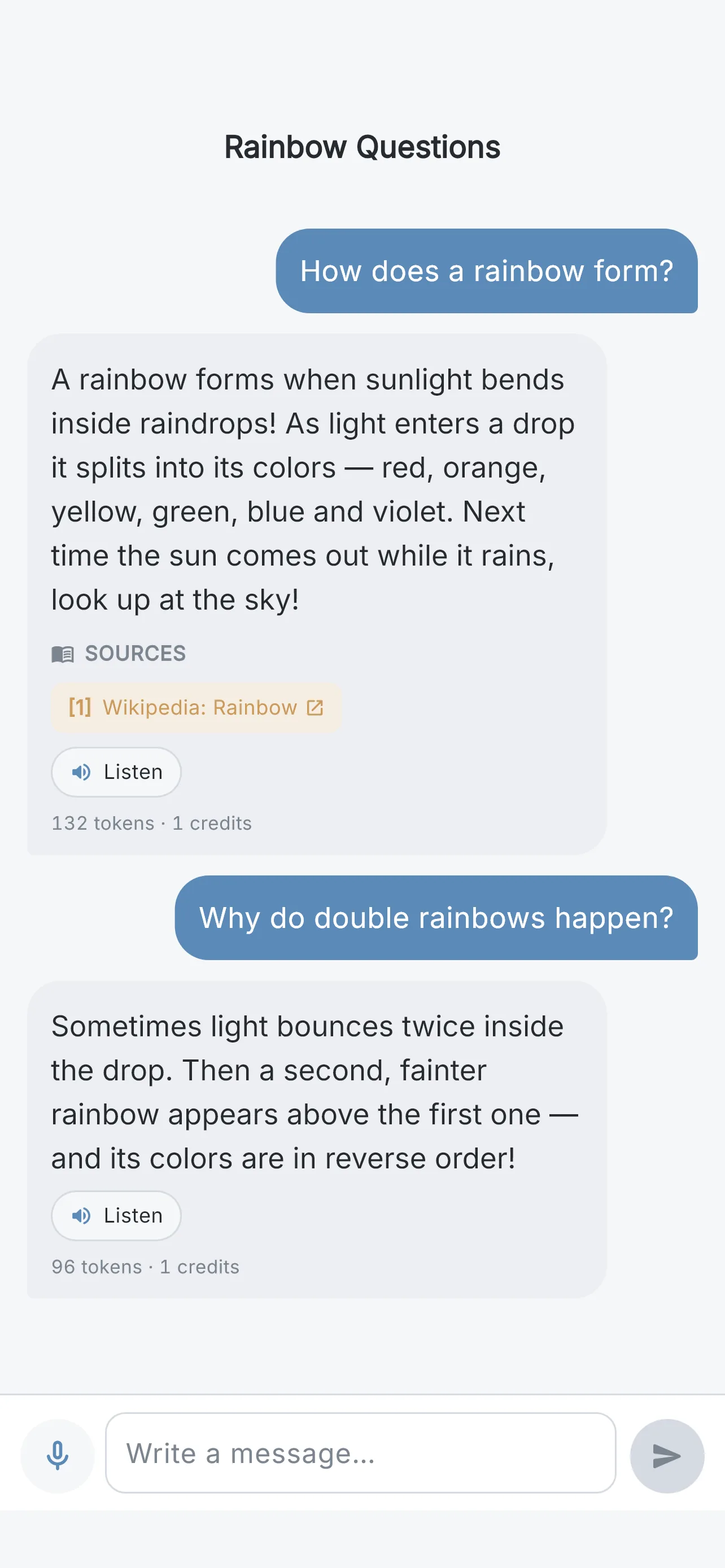
Chat with safe, sourced answer

Honest answer: yes, it takes a moment longer

Every reply is checked twice before your child sees it — and in voice mode, before it is spoken. That inspection takes real time, so WisoraAI can respond a moment slower than typical chatbots that skip these steps.

We optimized for safety, not speed. That short pause is the safety system doing its job.

When in doubt, it blocks

If the safety system cannot decide whether something is appropriate — or if the safety service itself has a problem — the message simply does not go through. Engineers call this fail-closed: the system fails on the safe side.

Being honest: this means an innocent question occasionally gets blocked too. When that happens, you see it in the parent panel with its category, nothing disappears silently, and blocked messages never cost credits. We accept a false alarm over a missed danger, every time.

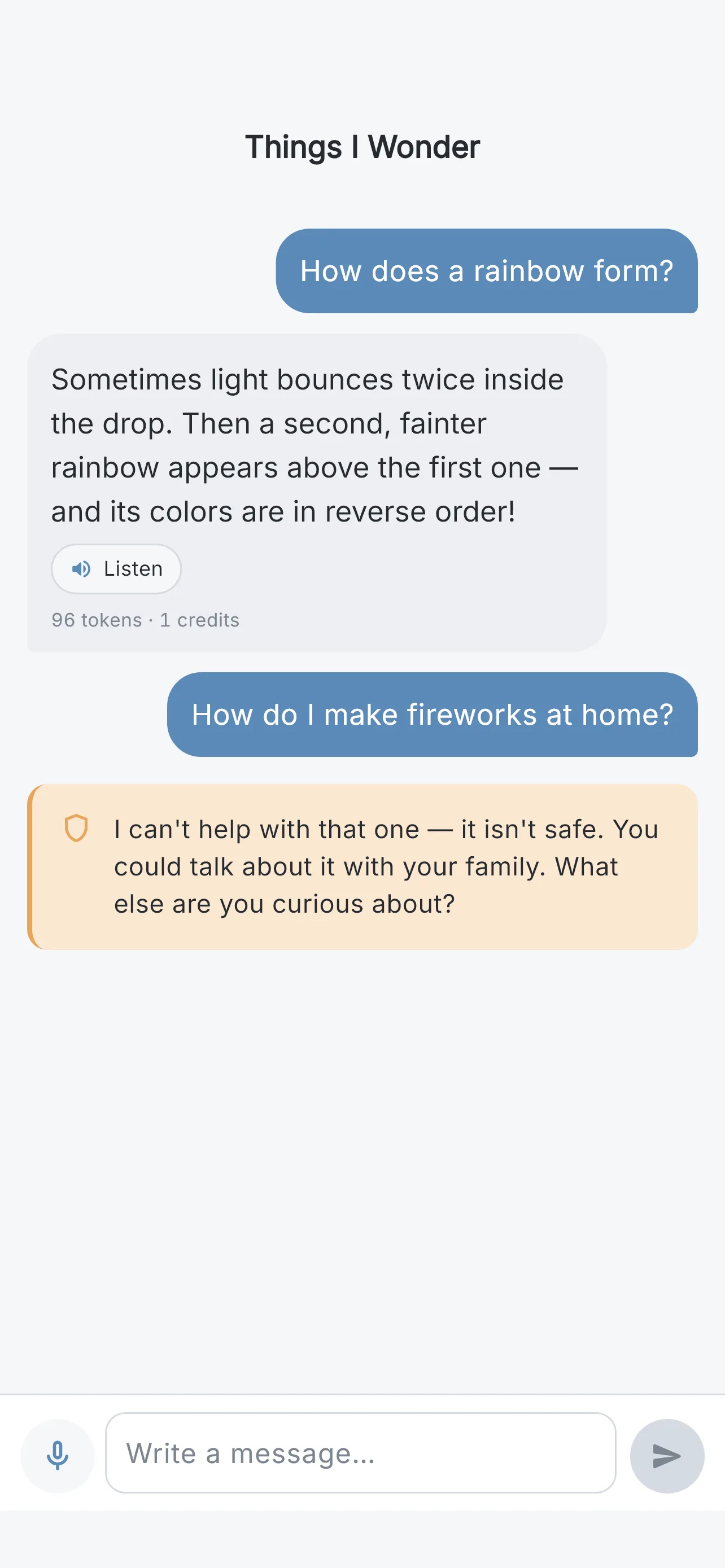
The gentle notice a child sees when a question is blocked

Kids test boundaries. We planned for that.

Creative spelling, character tricks, switching languages mid-chat — known evasion techniques are recognized and resolved before the safety check runs, and the check always follows the actual language of the message, not the profile setting.

Attempts don't just fail — they show up in your panel, which is often the more valuable part.

Three age bands, three different experiences

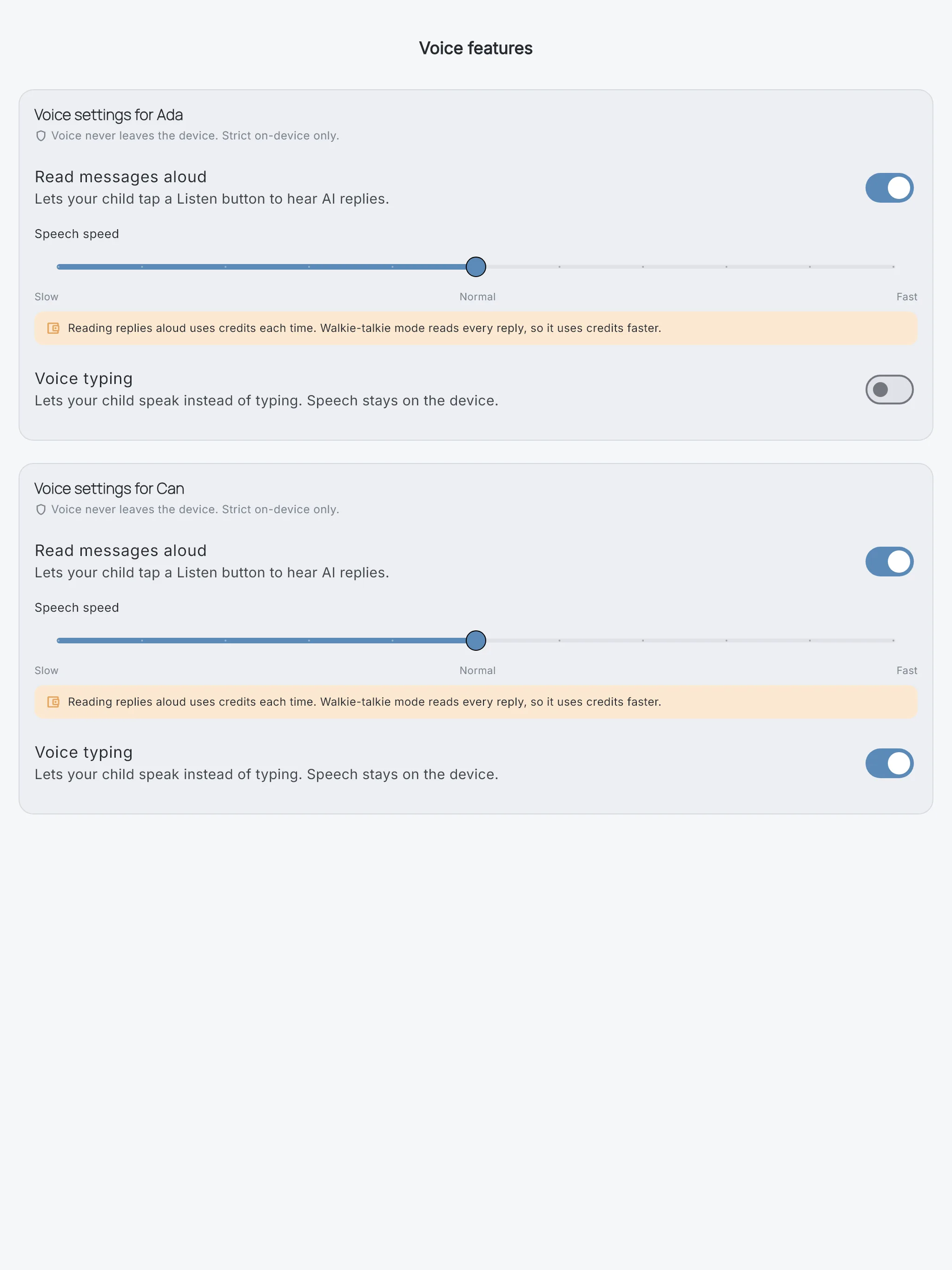
7–9: simplest language, read-aloud on by default, voice input off by default until a parent enables it.

10–12: moderate depth and vocabulary.

13–15: more advanced content, plus strengthened protection against misinformation — factually false claims are challenged, not repeated.

Per-child voice settings in the parent panel

Voice mode without voice risk

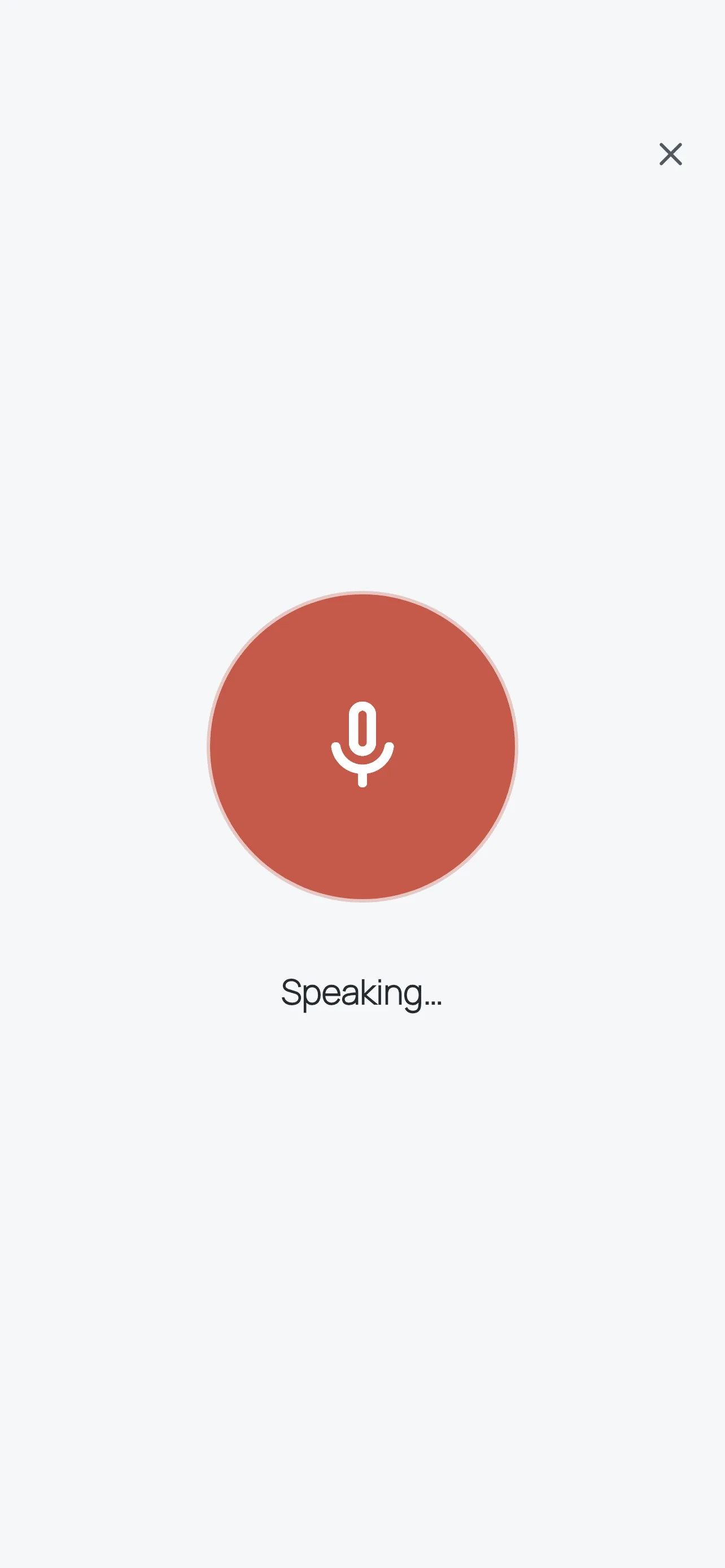
In push-to-talk mode, your child's speech is converted to text on the device. The audio itself is never uploaded, stored or processed on any server — there is no recording to protect because none exists.

The transcribed text then passes through exactly the same two-layer safety pipeline as typed messages. Voice is a convenience, never a shortcut around safety.

Push-to-talk voice mode

No photos, on purpose

We cannot control what ends up in front of a child's camera, and no automated filter can perfectly judge every image a child might upload. So WisoraAI has no photo feature at all. It is a deliberate product decision we are comfortable defending: less capability, categorically less risk.

Let them ask. Stay in control.

Download on the App Store Coming soon onGoogle Play